"Would it help?"

I don't generally take object lessons or rubrics away from movies. Other than don't go up against Javier Bardem or Josh Brolin without armor and a buttload of firepower. But Bridge of Spies did supply me with a thoughtful piece of advice. One I try to follow.

Will the real Rudolf Abel please stand up and worry?

Will the real Rudolf Abel please stand up and worry?

Tom Hanks plays an insurance salesman who used to be a lawyer. Mark Rylance won an Oscar for best supporting actor, and his role was that of cold war spy Rudolf Abel. It was a fairly quiet, mannered movie with superb acting and portrayal of a time in U.S. history that was both paranoid and simplistic.

The capture of Abel (who wasn't Abel at all, but who had so many personas the prosecution settled on one that conveniently made him a KGB Colonel) and his subsequent imprisonment, rather than execution was a large part of the story.

Hanks's character, Jim Donovan, took his appeal all the way to the Supreme Court, making himself and family extremely unpopular, but his determination to save Abel's life proved brilliant. It gave the U.S. a trading card for the return of our spy, Francis Gary Powers and an innocent student, at a later date.

The film is quite good, though it severely abridges the Powers story for the sake of continuity; real events are rarely so convenient as portrayed in movies.

What I found to be valuable advice is this: when Hank's character is talking to Abel in prison, he is taken aback by Abel's calm demeanor at the prospect of being executed. He says to Abel, "you don't seem alarmed. Aren't you worried?"

To which Rylance's stoic character replies, softly, "Would it help?" 

To me, this became a leitmotif. At Checkpoint Charlie when Abel is being exchanged for Powers and the student, Hanks once more poses a worrisome thought about what will happen to Abel when he returns home. Although he has told nothing to the U.S. interrogators, the Soviets might think he had. "Are you worried that they might execute you?" The answer, of course, in Abel's calm unruffled manner is, "Would it help?"

A secret compartment nickel figures in Abel's movie capture, but in reality another spy spent it and it bounced around New York's economy for months until a newsboy discovered it.

A secret compartment nickel figures in Abel's movie capture, but in reality another spy spent it and it bounced around New York's economy for months until a newsboy discovered it.

I believe it happened three times in the movie (here's a wonderful example on youtube) and I took it to heart every time. It reminds me of another prosaic saw: Worry is like a rocking chair. It gives you something to do but it doesn't get you anywhere. If Abel is being truly portrayed in Bridge of Spies, he had admirable qualities. He asked little of the world around him. He believed in his cause and was a "good soldier." He was courageous and conveyed that Kiplingesque attribute of keeping his head when all goes wrong. All for the wrong side, true, but admirable, nevertheless.

He has been called, "arguably, the most successful Soviet spy of all time," and probably would never have been discovered had it not been for another Soviet spy who drank too much. Here's to that guy, a round of Stolichnaya, please.

We all have worries, things that wake us up at night. Financial, medical, existential stuff. That slow-to-come promotion, a simple oil change that turned into a fire-breathing compressor replacement bill, an IRS notice, a crappy contractor--on and on and on.

Five minutes ago I got off the phone with a major company. They were supposed to be here before noon for an installation. I am also trying to take a workshop course with a bestselling novelist. Trash that for today.

I finally cancelled the installation. There was a misplaced digit in the phone number (mine) that prevented the company from contacting me. Their mistake, not mine, I checked. The human from the company kept telling me "They were in your area but couldn't contact you..." I kept saying, "I know that."  My blood pressure has spiked, I'm sure. And now I've missed a whole morning of the first day of workshop. I could pretty much spit nails right now.

So I look at what I've written about Abel and the unflappable visage of Rylance's Rudolf Abel floats before me.

I ask him, "Well, wouldn't you be steamed?"

And he answers, without a trace of irony, "Would it help?"
Road Rash: the misadventures of an errant biker.

"Needs a mufflerectomy...and baby moons, and a tach."

"Needs a mufflerectomy...and baby moons, and a tach."

I was ten or twelve when it took hold. The infernal combustion disease. The seeds were sown by the first power lawnmower I was trusted with. The Johnson sisters had a vacant lot between their house and my grandmother's place, a big pie-shaped lot that needed mowing in the summer. Apparently they thought I was up to it. They pointed the mower out in their garage, along with a gas can. And they paid me. I'd have paid them.

I not only figured out how to start it, I adjusted it to run at optimal speed and duration. I'd had plenty of experience with model plane engines and their needle valves, choking and priming them, all stuff that translated to bigger machines. I loved that mower. I removed the muffler and reveled in the noise. I was alerting the world to bigger things.

One of the sisters had a son named Bill who had just returned from the war. He had bought the mower but soon tired of it and it fell to me to maintain it, use it, nurture it. It gleamed from being cleaned and even waxed. Safety issues: I was aware of the whirling blade beneath it as I'd been aware of the propellers on the model planes. And back then we were unencumbered by safety glasses, ear protection, or steel-toed boots. I made it all the way to motorcycles injury free, save for a barely noticeable slight hearing loss. What?

"Aw, come on, officer, we're just havin' fun..."

"Aw, come on, officer, we're just havin' fun..."

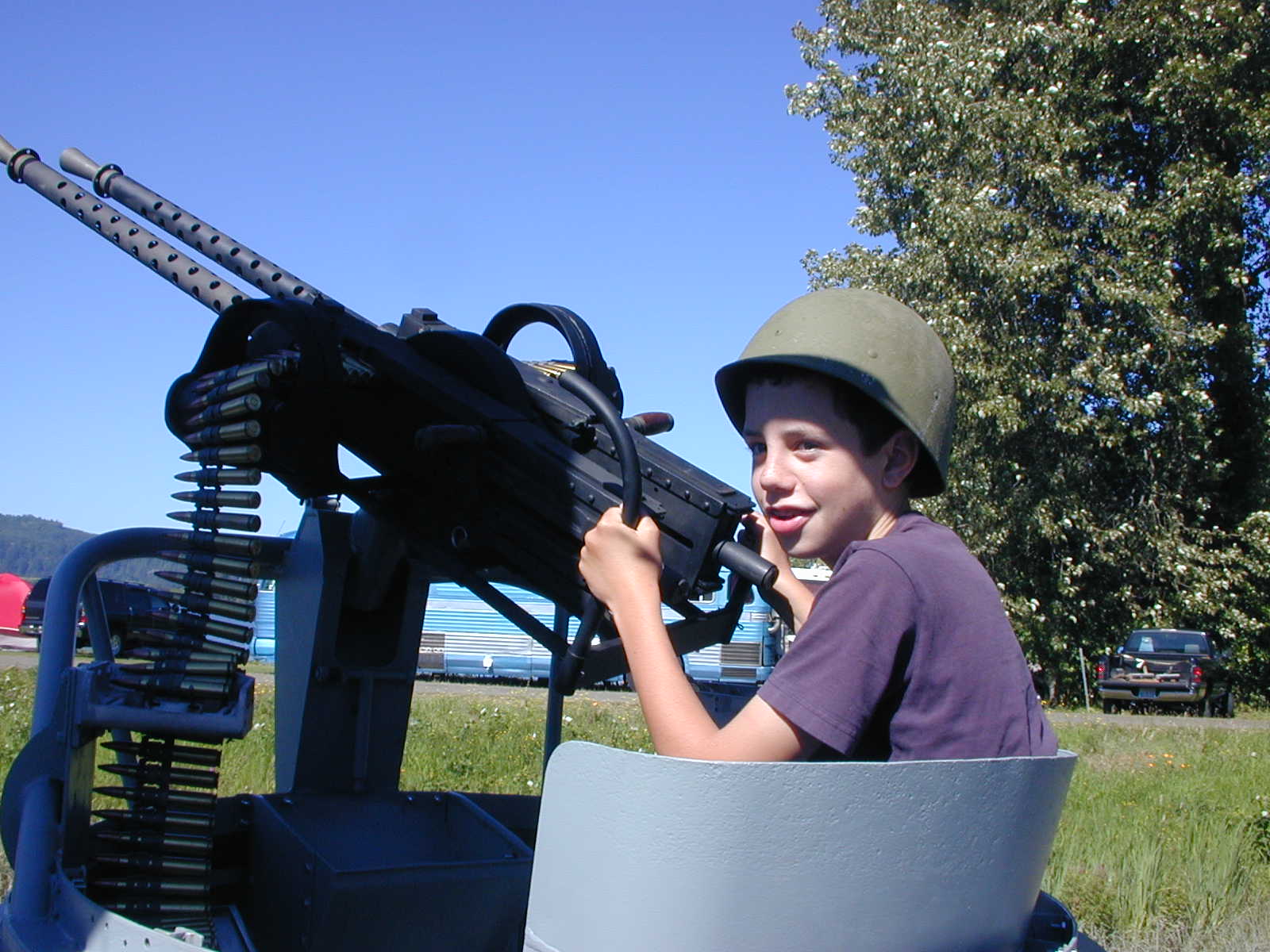
A digression. Another reason I loved the Johnsons aside from the mower, free Cokes, and the firecrackers they gave me to scare away the pigeons, was Bill. He treated me like an equal. And he'd somehow acquired an olive drab fifty caliber dual mount machine gun complete with tripod and dummy (I think) ammo belts. He set this rig up in the front yard and we took turns following cars with it, making ta-ta-ta sounds. He sat behind it knees supporting his elbows and told me about direct hits and how tracers helped, how not to fire in extended bursts for danger of overheating. Then the police came.

I was sent home. I never saw the gun again, but Bill's mood was upbeat and he seemed undeterred by the incident. He bought an Olds convertible and I saw less of him than I had before. He allowed me to peruse the engine of the car, work the top, sit behind the wheel occasionally. Then the school year began and I returned home.

"Envelope? What envelope?"

"Envelope? What envelope?"

Fast forward. Motorcycles. I was fourteen and discovered a place on Troost that rented BSAs. This was biker summer. I also discovered that bikes didn't stop as quickly as cars, ending up beneath the rear bumper of a 1950 green chevy. I remember that car. A woman drove it and stopped in the middle of a secondary highway. Just stopped.  I tried to stop. Her car helped me in that regard.  At impact, she took off again. I wheeled the BSA to the side of the road, limping. I finally got it started again, and, lesson learned, returned to the dealer who didn't notice the damage or didn't care. I used an older boy's license in this activity and rented several more BSAs. I learned a great deal that summer. I learned that by shifting after winding out I could lift the front end off the pavement. Not a valuable lesson, perhaps, but a thriller to me. I also learned, by mishaps, the difference in handling of some machines. Triumphs, for instance, were a little light in front, and such shenanigans could flip one. Same with the bigger BSAs. A lesson I forgot along the way.

Fast forward again. Years later I took a modified BSA chopper to Omaha. I was sitting at a stoplight on Dodge Street minding my own business, when a noisy Monte Carlo full of teens pulled up next to me. They fishtailed off when the light changed. We were next to one another at the next light.

The weather was springlike, I'd had a couple of beers, and thought oh what the hell. The light changed, I got on it hard, and, owing to the bike's extended forks, the whole thing went flying backwards over my right shoulder. It landed in pieces.

That was bad, but what put the black icing on the crow pie was, they put it in reverse and squealed backward until we were side by side once more. The passenger said, "Eddie missed that. Is there any way you could do that again?"

I think he was serious. They were all very wide-eyed.

The gearshift punched a hole in the gear case, the fork was bent sideways, the seat was off, and I was learning lessons again. I called a friend with a pickup and he took the bike to repair it. The oil and gas deposit looked in need of a haz-mat cleanup.

I've exceeded the word count for most of us short-spanners involved in social media by about 800 words, and there's so much more to tell. High speed wobbles in the rain on a BMW. Trying to speed through Iowa in a snowstorm on a Harley. Riding a fallen Bonneville by sitting on the hot engine and holding onto a fuel line as it spun around on its side. And more. Maybe later. I no longer ride. And if I do, decline to sit behind me. I may still be learning.


BOT WOT

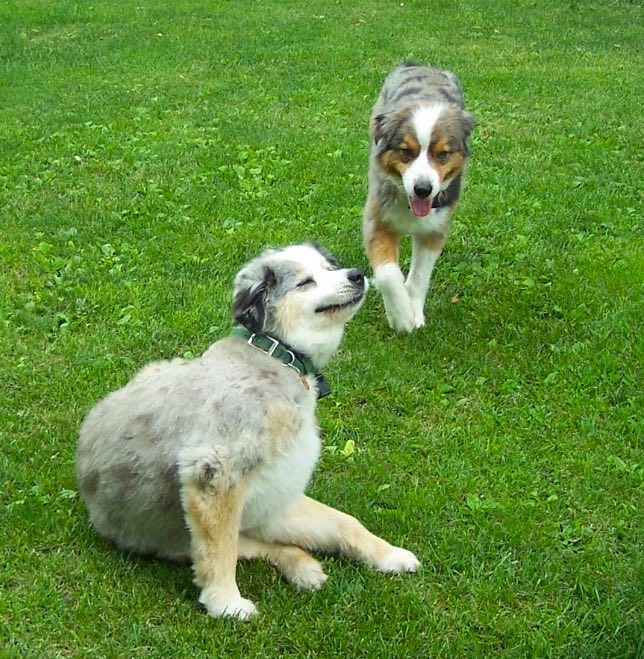
Lucy (foreground, scratching) and Rocket in younger days

Lucy (foreground, scratching) and Rocket in younger days

That's texteramus for "Best of Times, Worst of Times" or is it WOT BOT, can't remember the Dickensian book start, but ITM (It Matters Not). This whole summer, for me, is summed up by the Best/Worst deal. Most of us got through it. Even Lucy, as I write this, is hanging in there, but winding down. She and brother Rocket celebrated their 13th birthday October 15th. They got toys, and bless her, she fought for one that he has now hidden. She won, too, keeping her "Toy Retention Champion of the World" title. They are ninety-one in Aussie 50-lbs-and-over years.

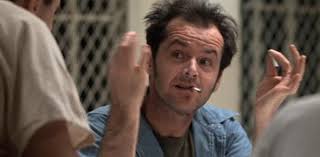
WTF, I took my meds, okay? Okay?

WTF, I took my meds, okay? Okay?

Summer, this October, seems ever with us. Global warming, sure. Happens every fifteen or twenty million years I'm told. Finally though, the nights are cool. Soon the days will be. Baseball is still humming along. Cubs and Dodgers are tied 2-2. Indians are waiting for one of them. I didn't regard the Blue Jays as legal anyway. By the time I post this it'll be history. Maybe the weirdass election too. Jeez. Nurse Ratshit (Ratchett?) against Jack Nicholson in that Cuckoo movie.

Expenses were awful. We managed to get the house rehabbed, painted, and F's daughter's place livable, all but the roof. We'll get that soon I guess. You've no idea the horrors involved in those two sentences. And, not wishing to relive them, I'm dropping that whole subject like a dirty shirt. 

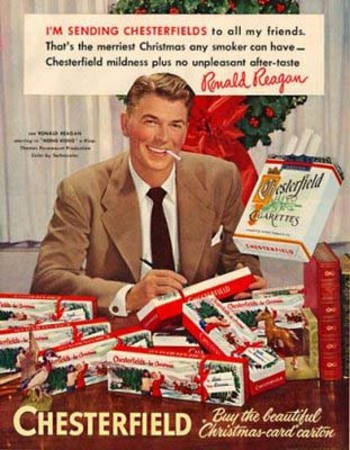
This is showing signs of becoming one of those godawful purple mimeographed Christmas letters most of you are too young to remember. (Aunt Maudie broke her whatever and poor Ron was arrested again for a trumped up charge of driving while etc.) Most people hated those yearly missives like kids hate fruitcake, but I read them aloud with glee and appropriate voices for each participant. I miss those like I miss the electric train Christmas display in Macy's window. And ads with a pre-presidential Ronald Reagan shilling for Chesterfield cigarettes.

                                                                                 Simpler times.

If elected, no unpleasant aftertaste...

If elected, no unpleasant aftertaste...

Poems. I waxed poetic and dropped fiction for awhile. Got twenty-one a' them suckers into the lit rags at most recent count. Everything from Rat's Ass Review (true) to Oxford Magazine. Noble objectif? The New Yorker.  I'm gunning for poet laureate of Resume Speed, Kansas. And trying to finish L.A. Hardscape, a novel which will be published by Black Opal in 2017. I'm at page 157.

Had to quit the novel for show prep for a gallery in sunny Santa Monica. Slow going. They want my work, but they don't want my work that I want them to want. So I'm second-guessing that outfit. Trouble is, welding is hard work. And when you make something it pretty much stays made. If the welds are good.

Plus a freelance job that is a joy but has deadlines and interferes with all else, but I'm committed. Or I will be. Nicholson reference again. Anyway, this is long and disjointed enough. Newsy as a mimeographed crazy-letter at holiday time. Speaking of which, Happy Thanksgiving and Merry Christmas. Or whatever you celebrate. Or don't celebrate. Or want to institute a class-action suit against. This PC shit gets convoluted don't it? Joy to the world.


"I knew Tony Schwartz, and you, sir, are no Tony Schwartz."

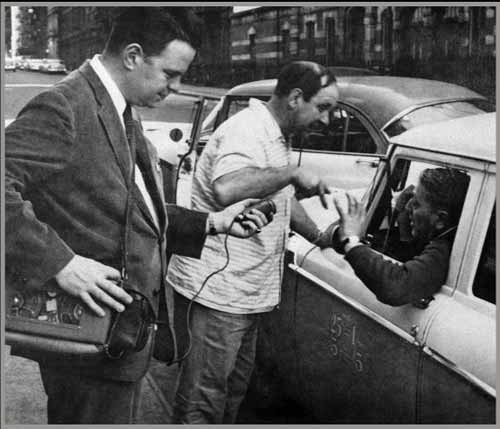
Interviewing the cabbie who said, "That's my opinion and it's very true." during his NY radio shows.

Interviewing the cabbie who said, "That's my opinion and it's very true." during his NY radio shows.

I met the real Tony Schwartz back in the 60's when I was looking for me and he helped me find me. The Tony Schwartz that's getting all the ink these days is the ghostwriter/co-author for "Art of the Deal" and I have little to say about that Tony Schwartz, except if he didn't believe what he wrote then, why did he write it? Because, I guess, we all chase the buck in our own way, and we're all guilty of pandering to one degree or another. Heck, I'd have jumped at that deal. So I can't judge that Tony Schwartz. It's the other one, the real one, who is so important and dear to me.

I was an art director in advertising, trying to figure out why I was in that business and what life itself meant. I read Viktor Frankl and Napoleon Hill. I watched the giants in the business--Bill Bernbach, George Lois, Howard Gossage, all the Mad Men, and emulated them. I was an art director, but became interested in media beyond the visual, and found out you could art direct radio. Tony Schwartz was doing big things in sound--such as recording a swath of New York block by block for miles on street level and above. He invented the first portable recorder, taking a bulky reel-to-reel and tweaking it for carrying with shoulder straps and various improvements.

Tony Schwartz taught with McLuhan at Fordham University, and he held degrees from several colleges and universities.

Tony Schwartz taught with McLuhan at Fordham University, and he held degrees from several colleges and universities.

He's known as a sound archivist, but sound activist would be more like it. He was a colleague of Marshall McLuhan (The Medium is the Message) and McLuhan called him "the guru of the electronic age," and said, when they met, he had met "a disciple with twenty years prior experience."

I wrote to Tony several times, but got no answer. So I took to pestering him with a barrage of postcards with embarrassing messages from a nonexistent paramour, a lady of the night from Iowa where I lived at the time. I discovered a box of starched shirt collars in a barn in Muscatine and found I could send them through the mail with felt tip pen messages and stamps. I sent him one. He sent me a card back, saying "Dear GW, don't give up. I am weakening."

Thus started our friendship.

I came to know him as a brilliant, kind, gentle, inquiring person. And I sent his lady Friday roses on her birthday, called her and we talked often, as did Tony and I. They invited me to NY to their offices (an old church) but I had to decline. He understood, being agoraphobic. So our communication, though strong, was always long distance.

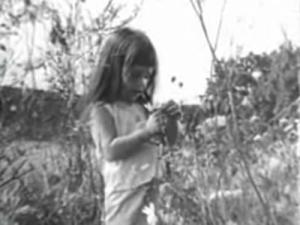
She is counting petals. Her VO dissolves to that of man counting down to zero...

She is counting petals. Her VO dissolves to that of man counting down to zero...

He was an activist, as I said. Nuclear disarmament, AIDS awareness, smoking cessation, and many other causes were important to him. Gentle though he was, his deep beliefs led him to be ferocious. He was heavily involved in the LBJ "Daisy" commercial, known as the most famous political attack commercial of all time. It opened with a little girl in a meadow plucking daisy petals. LBJ says a few words, then BOOM, the world is obliterated. Implication: Goldwater was a trigger-happy cowboy who would destroy any chances for peace. It was visceral, and it was pulled shortly thereafter. But it was seen by millions.

He also did commercials for Carter, Humphrey, Bill Clinton, Ted Kennedy and McGovern. Aside from politics, clients included Coke, (that TV commercial where the only audio is the 'schwizzz" of the cap coming off and the bubbling of a sweating bottle of Coca-Cola), Chrysler, American Express, Kodak, and hundreds of others. 

There's so much I could say about him, and probably will in future blogs. But this was my small tribute to his work and its power, its efficacy: once, when I had control of The KC Art Directors programs as president, I did a Tony Schwartz evening. The room was busy, drinks were being consumed, Tony had been a graphic designer early in his career, and I had shown some award-winning posters of his on the program announcements.

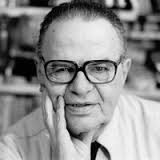
Tony Schwartz, August 19, 1923 -- June 15, 2008

Tony Schwartz, August 19, 1923 -- June 15, 2008

Then, as people were seated, I had all the lights extinguished. Total darkness, except for the glow of cigarettes (yes, people smoked in places like that back then). Then I played a 45-minute Tony Schwartz tape, starting with a NY cabbie saying, "That's my opinion and it's very true." A classic, now in the hall of fame.

There was some restlessness, some WTF's of the day, then that subsided and these visually-oriented designers and graphics folks were each in their own world of interpretation of what was being said and the sounds that he'd recorded. No one complained. Far from it. If I'd have thought of it, I'd have recorded the applause and the many positive comments and sent them to him. But I'm no Tony Schwartz. He was one of a kind. Thank you Tony, for opening my eyes. And my ears. I'm using your powers of observation to this day.

How I learned to read, write and dream.

Toad was a hero. A wild thing, and quite a wit.

Toad was a hero. A wild thing, and quite a wit.

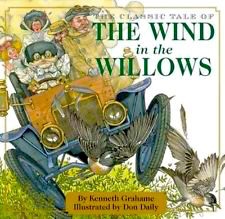
When I was small, some kindly people in my family read to me. Winnie the Pooh. Wind in the Willows with the irrepressible, irresponsible Toad of Toad Hall--I met some like him in advertising. Wild Animals I have known, Ernest Seton Thompson. The Jungle Book. And they took me to movies: Bambi, Fantasia, Snow White. Fantasia was psychedelic to my young brain--what a trip. I veered off into comics.

Comics and more comics. Mind-warping stuff. The Spirit, Vigilante, Air Boy, Green Lantern, The Shadow, the list is long and loathsome to those who would shape a boy's life. I did read Boy's Life, but only because I was absorbing everything in print. No TV back then. Just imagine. That's what we did: just imagine. And it was mind-stretching.

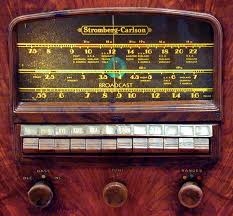
The closest thing to the internet was short wave radio and at night I could tune in foreign language stuff that sounded like ducks on a pond. I could get XERF Del Rio, Texas, hillbilly and gospel music. If you sent them an article of clothing with return postage and "blessing fee," they'd sanctify it, send it back. I couldn't afford it. My rabbit's foot key chain would have to carry me through the evil times. And my "if I should die before I wake" prayer which introduced a cruddy possibility that I hurriedly glossed over.

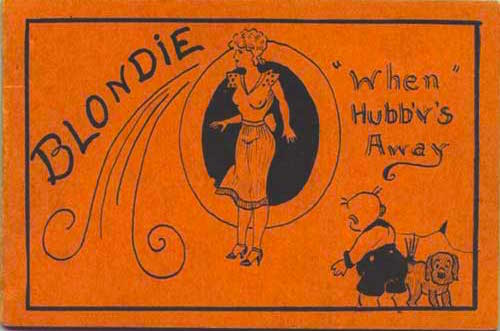
Now and then a kid at school would show us an "eight page bible," as pornographic comics were known then. These were slim, palm-sized affairs, on newsprint, horizontal, with panels that revealed a quick and luridly apocryphal story about Olive Oyl and Popeye, or Blondie and a plumber. But I was a comic connoisseur and knew the art was forgery. I missed the point, I was told.

"That's not MY Blondie. And the lettering is no good."

"That's not MY Blondie. And the lettering is no good."

Then I discovered pulp novels. They lay around the house on side tables or in the trash I'd take out to the backyard to burn. The covers attracted me. Colorful art depicted women in odd circumstances or men in fedoras firing flaming forty-fives. (it's where I learned alliteration, too) At first I was disappointed that the pages of these twenty-five-cent paperbacks were full of words and not pictures with word balloons, but the packed words transported me. The first of these books that I remember reading was Angels Camp.

The banner on the cover said "This savage novel may shock you--but you'll never forget it. Bantam Books Inc. believes its readers want to know the brutal truth about juvenile delinquents--and whether there is any hope for them." It was true. I never did forget it. And I did want to know if there was any hope for me.

Maybe my folks had bought it in hopes of learning how to deal with my coming teen years. More likely they'd plucked it from a wire carousel at a drugstore in a moment of boredom. An attractive woman seemed to be luring young criminals away from a work detail. Was she nuts?! These were criminals, young ones, true, but everyone knew juvenile delinquents were the scourge of the times. I would have to read this. I did. And a lot of other books.

Much of Angels Camp was puzzling. I read the word "causal" as "casual." The name Marijuano Brown made no sense to me at all so I asked about it. And what were goofballs? My alarmed folks asked where I had picked up such terms, plus a lot more questions. I kept later enigmas to myself.

And this sentence, "The G-Man asked me did I use narcotics and I asked him was it soap or hair oil, that sure was a wigger."  (G-Man was Mr. Grozier, a counselor) Wigger had to remain on my puzzling list for a long time, as did "You're looking at the King Pachuco." And why the blonde lady wanted anything to do with these guys. (She did stuff with one of them in the woods, which I vaguely understood. I sure didn't ask my folks about that.) Many words sent me to the dictionary, a good thing. Wigger wasn't in there.

Anyway, I found this vintage book online, and ordered it. It's by Ray Morrison, a former probation officer in L.A. and, upon reading it again, over a half-century later, I found it to be pretty well-written. It was a bestseller, and enjoyed several printings. As did some of the other books I found around the house: Tobacco Road, Grapes of Wrath, Kiss Me Deadly, Twelve O'clock High, and dozens more.

I never stopped reading. And I started writing. Along the way I dreamed a lot. And posited "What if?" And I managed to stay out of prison. Though my aunt Mickey used to look at my hands and say, "Spatulate fingers. Definite sign of a criminal." But I applied two of those fat digits to the typewriter, then the keypad rather than more lucrative criminal enterprise. But who knows, I may hit it big yet.